
#EMMA SUPPORTER
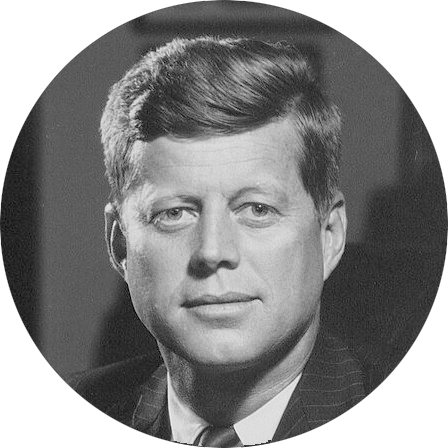
Lord Smith

Chris Smith was born on 24 July 1951 in Barnet, London. He is a distinguished British politician, and academic leader whose career has been marked by groundbreaking achievements and a steadfast commitment to public service. He had recognised EMMA’s work to define the Creative Industries through the EMMA TV Show as a distinct Multicultural workplace from 1997 and his subsequent attendance to the EMMA shows. This was prior to his own work, as the Secretary of State for DCMS to undertake the Creative Industry white paper in 1998 supporting EMMA work.
Chrish was raised in Edinburgh, and attended George Watson’s College before matriculating at Pembroke College, Cambridge. There, he earned a double first in English and completed a PhD focusing on the poetry of Wordsworth and Coleridge.
Chris’ academic pursuits extended to Harvard University, where he was a Kennedy Scholar. During his time at Cambridge, he served as president of the Cambridge Union Society, reflecting his early engagement in public discourse and leadership.


His political career commenced with his work for a housing charity and as a councillor in the London Borough of Islington. After an initial electoral bid in Epsom and Ewell in 1979, he was elected as the Labour MP for Islington South and Finsbury in 1983. In 1984, he made history by becoming the first openly gay male British MP, a courageous act that paved the way for greater LGBTQ+ representation in politics.
Throughout his parliamentary tenure, Chris held various positions, including opposition whip and shadow ministerial roles in the Treasury, environment, heritage, pensions, and health portfolios. In 1997, he was appointed Secretary of State for Culture, Media and Sport under Prime Minister Tony Blair. He had gone on to undertake the groundbreaking white paper on Creative Industries
A pivotal achievement of Chris’ tenure was the commissioning of the Creative Industries Mapping Document in 1998, possibly inspired by EMMA’s own work in 1997 to define this Creative Industries as also being Multicultural, which for the first time quantified the economic impact of the UK’s creative sectors.
The report revealed that the creative industries generated revenues of about £60 billion per year at the time and employed over 1.4 million people. This groundbreaking work laid the foundation for the government’s ongoing support and recognition of the creative industries as a vital part of the UK economy that was adopted by other nations.
During his tenure, Chris was instrumental in restoring free admission to national museums and galleries, establishing the Foundation for Youth Music, the Film Council, and Creative Partnerships for schools, and significantly expanding funding for the arts and sport. He also served as Chairman of the Millennium Commission, overseeing cultural projects associated with the turn of the millennium.
After stepping down from the Cabinet in 2001, Chris continued to influence public policy and cultural affairs. He was appointed Chair of the London Cultural Consortium and later served as Chairman of the Advertising Standards Authority from 2007 to 2017. Chris’ contributions to the cultural sector are extensive.

He was a founding director of the Clore Leadership Programme, aimed at developing leadership in the arts, and has held positions such as Chairman of the Wordsworth Trust, the Art Fund, and the Donmar Warehouse Theatre. In 2004, he chaired the panel of judges for the Man Booker Prize for Fiction, highlighting his deep engagement with literature.
In 2005, Chris was elevated to the House of Lords as Baron Smith of Finsbury and currently sits as an independent peer. He has continued his academic involvement, serving as Master of Pembroke College, Cambridge, since 2015. His leadership has been pivotal in advancing the college’s mission and fostering academic excellence.
In 2008, Chris became Chairman of the Environment Agency, a role he held until 2014, where he addressed critical environmental challenges, including coastal erosion and flood management.
Beyond his professional achievements, Chris is an avid mountaineer, known for being the first MP to climb all the 3,000-foot Munros in Scotland.
Chris has also been a patron of HIV-related charities, including The Food Chain and the National Long-Term Survivors Group, reflecting his commitment to health advocacy.
Lord Smith’s life and career embody a dedication to public service, cultural enrichment, and social progress, making him a prominent figure in British public life.