WORLD WAR II
Slovakia

Following the Munich Agreement in 1938 and subsequent disintegration of Czechoslovakia, Slovakia declared independence on 14th March 1939, forming the Slovak Republic. Aligning closely with Nazi Germany, Slovakia became a client state and member of the Axis powers.
Slovak forces participated in military operations alongside German troops, including the invasions of Poland in 1939 and the Soviet Union in 1941. In 1942, the Slovak government deported approximately 58,000 Jews to German-occupied Poland, paying the Nazis 500 Reichsmarks per individual. These deportations led to the deaths of nearly all deportees, including a significant number of women and children.
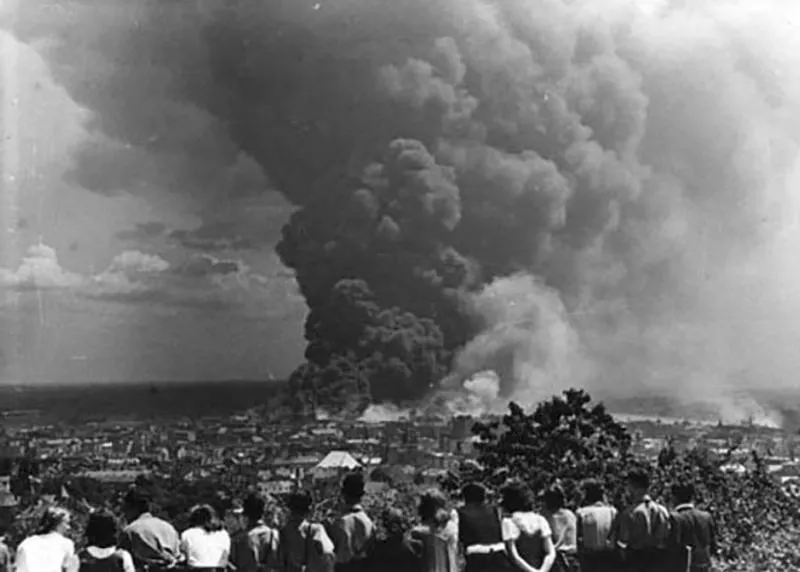
A resurgence of deportations occurred after the Slovak National Uprising in 1944, resulting in an additional 13,500 Jews being sent to concentration camps, with most perishing. In total, around 70,000 Slovak Jews, approximately 78% of the pre-war Jewish population, were murdered during the Holocaust.
Slovakia’s military involvement included the deployment of troops alongside German forces on the Eastern Front. However, internal opposition grew, culminating in the Slovak National Uprising on 29th August 1944. The uprising saw approximately 60,000 Slovak soldiers and 20,000 partisans taking up arms against German occupation. Despite initial successes, the insurrection was suppressed by October 1944, leading to significant military and civilian casualties.
The Slovak National Uprising in August 1944, a significant resistance effort against the pro-German government, led to brutal suppression by German forces and local collaborators. Massacres occurred in villages such as Kremnička and Nemecká, where hundreds, including women and children, were executed. An estimated 5,000 civilians were killed during these reprisals.
Slovakia Declares Independence
70K
Slovak Jews Killed (Holocaust)
58K
Jews Deported in 1942
1944
Slovak National Uprising
Economically, Slovakia was integrated into the German war economy, focusing on the production of military goods and agricultural products for the Axis powers. Armament factories in regions like Dubnica nad Váhom and Považská Bystrica manufactured weapons, ammunition, and military equipment for Germany. This economic alignment led to exploitation and significant material losses, especially as the war turned against the Axis and resources became scarce.
Following the war, Slovakia was reintegrated into a reconstituted Czechoslovakia. The immediate post-war period involved addressing the war’s devastation, including rebuilding infrastructure and managing the displacement of populations. The Communist coup in 1948 further transformed the political and economic landscape, leading to nationalisation and collectivisation efforts that reshaped Slovak society.
Slovakia’s involvement in World War II as a client state of Nazi Germany led to profound human losses, especially among Jewish communities and civilian populations. The war precipitated significant economic exploitation and post-war political transformations, the repercussions of which continue to influence Slovak society today.
(Never Again – for Humanity)